Living Anthropology and Art Boundaries (LAB)
Living Anthropology and Art Boundaries (LAB) is conceived as an experimental laboratory that fosters innovative synergies between art and ethnography, exploring the potential of a knowledge that transcends traditional disciplinary confines. Drawing inspiration from the arts, social sciences, and humanities, LAB positions itself as a space of convergence and hybridization, where interdisciplinary and transdisciplinary collaborations can generate novel approaches to exploring and representing the myriad dimensions of the world. These dimensions – human and non-human, animate and inanimate, material and immaterial – can be experienced, felt, and imagined, yet they rarely find adequate expression through purely textual or single-disciplinary methods.
LAB does not merely “occupy the margins” of disciplines; it actively challenges conventional boundaries, transforming them into spaces of exchange, tension, and innovation. Rather than striving for a precarious equilibrium between anthropology and art, its aim is to unveil the epistemological, aesthetic, and political fractures that emerge from their encounter. Exploring these margins entails opening up new avenues of research, venturing into uncharted territory, and engaging in continuous dialogue with an ever-evolving landscape. This dynamic, processual approach, rooted in a collective and socially engaged vision, champions a living anthropology and a critical art that question established conventions and paradigms.
LAB is committed to supporting experiments that meld emotion, sensoriality, and imagination with rigorous theoretical and methodological depth. The collaborations emerging from this space not only seek to produce new forms of knowledge, but also to create inclusive, evocative, and transformative modes of expression. Embracing the notion that research is not a conclusive act but an open, evolving process, LAB encourages practices that transcend mere representation by incorporating performativity, evocation, and materiality as essential elements of anthropological and artistic inquiry.
We invite curators, artists, anthropologists, and researchers from all fields to contribute methodological explorations, transdisciplinary collaborations, and experimental projects that challenge disciplinary boundaries and embrace more dynamic and open modes of knowledge production. LAB stands as a generative space where the dialogue between art and anthropology serves not only as an investigative tool, but also as an ethical and political practice for imagining alternative worlds and confronting the challenges of our time.
Curator 2025: Marco Maria Zanin
The LAB inaugurates with the curation of Italian artist, researcher, and activist Marco Maria Zanin. Born in Padua in 1983, Zanin's work explores the intersections of contemporary art, anthropology, and community engagement. His research focuses on the relationships between human beings and their territories, emphasising an intercultural approach that values practices and rituals capable of strengthening the bonds between communities and their environments. His work seeks to place life, in all its forms, at the centre of artistic and anthropological reflection, examining how artefacts, rituals, and craft can foster deep connections between communities and their lands.
With a background in Modern Literature and International Relations, Zanin is currently pursuing a PhD in Anthropology at ISCTE/NOVA University in Lisbon. His thesis, entitled “Potencialidades na Fronteira entre Arte e Artefato” [Potentialities at the Frontier between Art and Artefact], investigates the limits and intersections between artistic practices and cultural objects. His works are part of prestigious public and private collections, including MART (Rovereto), Museu Morandi, Fondazione Modena Arti Visive, Fondazione Brodbeck, Fondazione Alberto Peruzzo, MAM in Rio de Janeiro, and Salsali Museum in Dubai.
In 2015, Zanin founded Humus Interdisciplinary, a platform dedicated to creating artistic residencies that connect artists with rural communities in the Veneto region. Humus focuses on the reinterpretation of local identities through artistic collaborations and cultural revitalisation initiatives. By integrating contemporary art into marginalised rural contexts, Zanin promotes community development and fosters a deeper awareness of the complex relationship between human life and territory.
Through his artistic practice and research, Zanin underscores the importance of creating new relational paradigms that bridge the gaps between art, craft, and community traditions. These intersections serve to foster sociocultural healing and reconnection in the face of modern fragmentation. By linking contemporary art, anthropology, and the role of ethnographic museums, his work reflects on art as a transformative tool for reanimating historical objects and engendering intercultural dialogue. Positioned at the confluence of multiple disciplines and assuming various roles, Zanin reimagines the ethnographic museum as a dynamic space where art, craft, and intercultural connections converge to promote a new understanding of heritage and address broader social issues related to identity, belonging, and cultural restitution.
Chiara Pussetti (Editor/Curator of LAB - Living Anthropology and Art Boundaries)
Conversazioni Barbaricine / Part 1 – Origins and geographies of an art-based research
Marco Maria Zanin
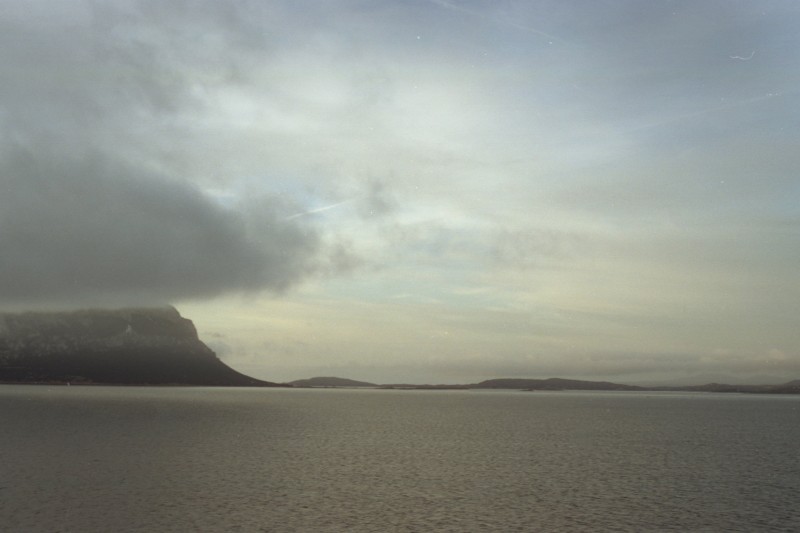
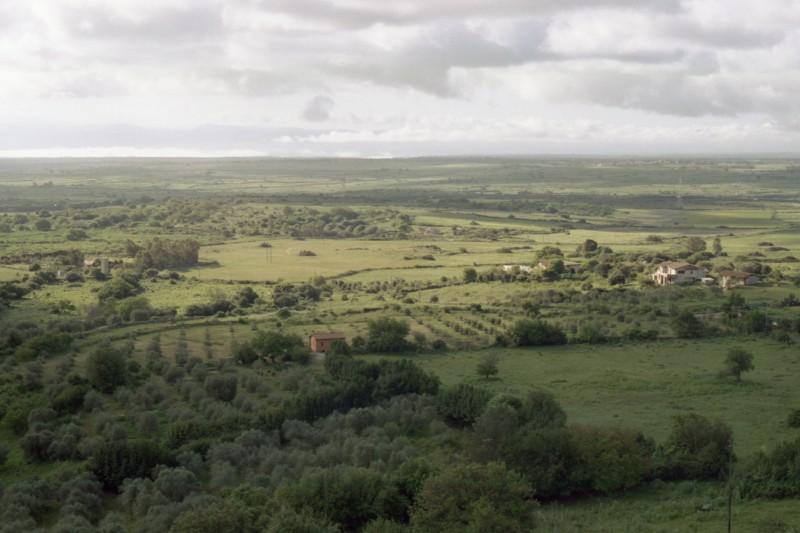
Sardinia as an island.
The island as a space of resistance: circumscribed yet dense, capable of preserving what elsewhere has been dissolved.
A privileged field of observation to trace the survival of practices of making that are resistant, sensitive, radical.
I have known it since childhood.
I used to spend summers with my godfather in Monti, a small inland village not far from Olbia.
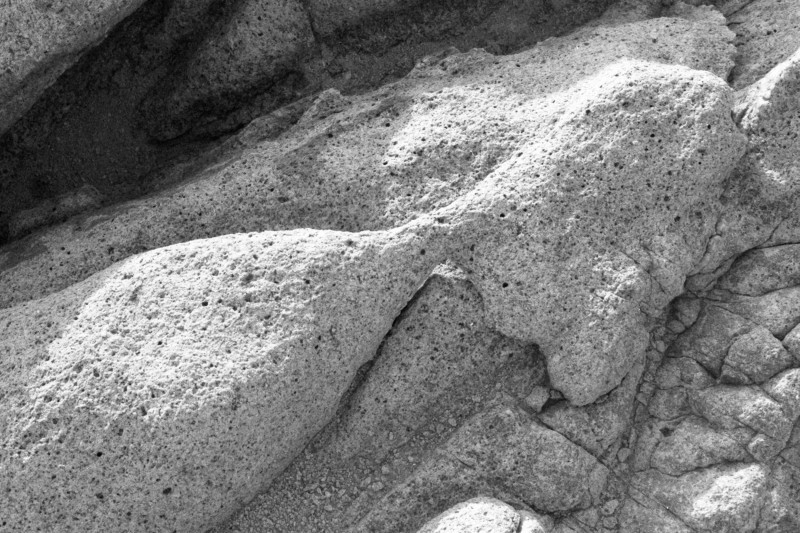
I remember the afternoon silence, the sharp light, the granite that seems to breathe.
The archaeologist and anthropologist Giovanni Lilliu described, in reference to Sardinia, the notion of costante resistenziale a persistent, subterranean force that runs through the island’s history, able to adapt without ever surrendering.
A form of cultural and moral opposition that expresses itself not through open rebellion but through endurance: the silent continuity of gestures and knowledges.
This land remains charged with tradition and spirit.
Its people are rebellious, defending their identity not as folklore but as a vital stance.
Sardinians are hospitable, but not immediately: they first observe, measure and need to understand who they are facing.
Once trust is established, it becomes a form of alliance – deep and loyal.
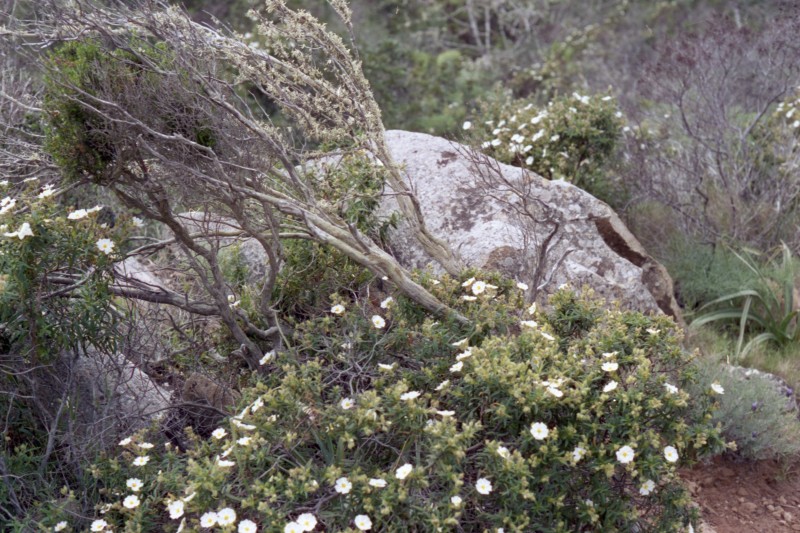
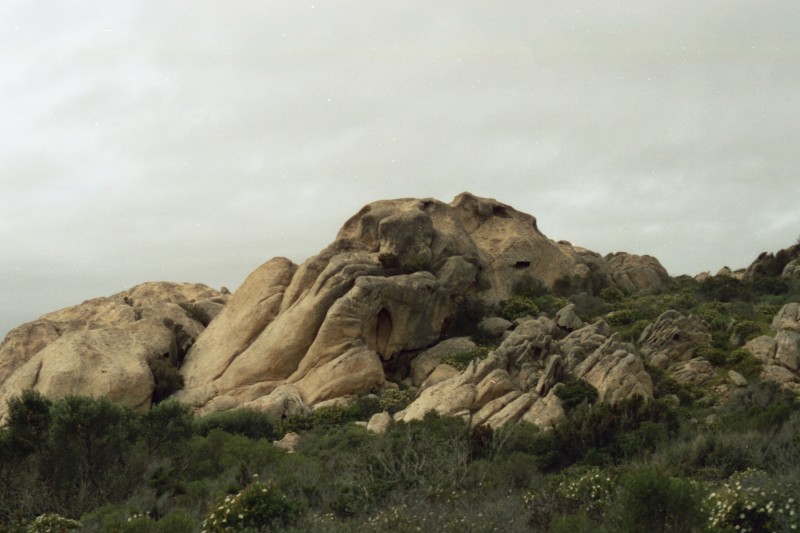
It is a land of rocks and shrubs, of granite and mastic trees, scorched by the sun yet rich in hidden water.
Nature here is strong, present, pervasive, not a backdrop but a force shaping ways of living and thinking.
A land filled with spirit and ancient rites, where the pagan has never fully disappeared but coexists with the everyday.
Even the language, Sardinian, remains both a barrier and a refuge: incomprehensible to most Italians, yet full of sounds and images that contain an entire world.
--
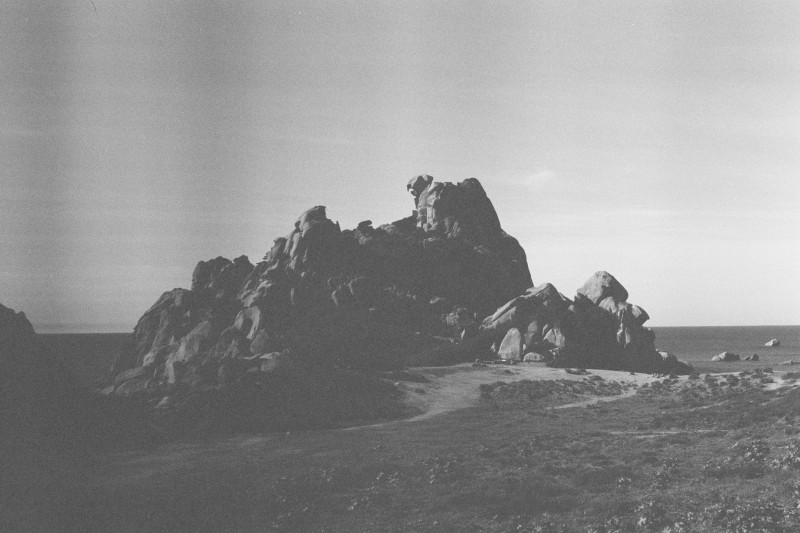

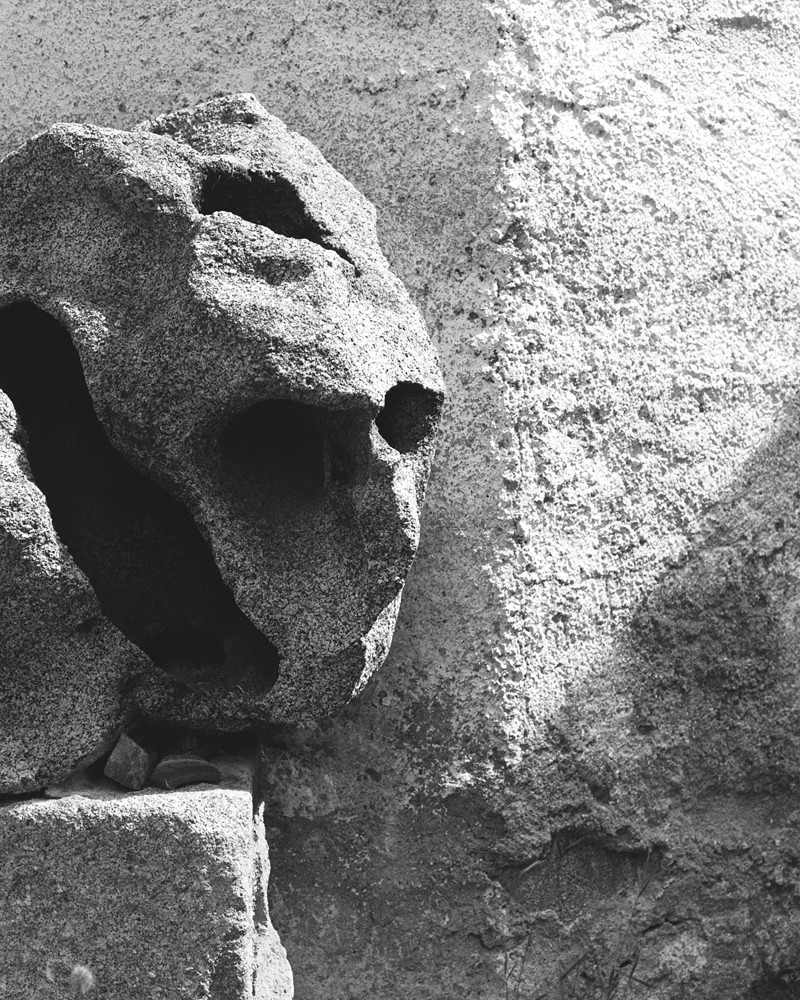
Those sculpted heads in stone or wood that mark the roads of Sardinia, the entrances of houses, the dry-stone walls along the paths, resonate in me with particular force.
Totemic figures, anonymous, at times grotesque, at others hieratic – presences that both observe and guard.
They echo in me as strongly as the ritual objects from distant cultures – African, Oceanic, Brazilian – that I have encountered in ethnographic museums or during my travels.
In them I recognize the same intelligence of the body as it moves with matter, the same dialogue with the spirit of the earth.
It is a form of knowledge that does not separate gesture from thought, form from life, revealing the ancestral connection between human beings and nature from which Western modernity has progressively distanced itself.
A deep sensibility, a capacity for listening that our culture – through arrogance, fear, or perceptual childishness – has been forgotten.
This wisdom of making, this embodied intelligence, could nowadays be called ecological:
not in an environmentalist sense, but as a way of being in the world in continuity with matter and its rhythms.
In Portugal, Ernesto de Sousa understood in exemplary fashion the aesthetic, the ethical, and political value of popular art.
His work, culminating in the exhibition Barristas e Imaginários, remains one of the most profound explorations of this art form as a living and uncodified language.
Together with figures such as Bruno Munari, Sousa challenged an intellectualized art detached from life and reclaimed popular art as a space of absolute beginning, a site of original invention and symbolic freedom.
He wrote that “the popular artist acts as a demiurge, a creator of objects with an immediate power to transform the world.”
In a letter, the sculptor Franklin replied that the most important thing was to find o lenho com a cadência certa – the wood with the right rhythm – since the form was already contained within the material itself.
It is this same logic that I encounter in Sardinia and across many cultures: the deep encounter between human beings and the natural world is rooted in the same act of listening.
A shared intuition runs through these traditions: form is never invented ex nihilo, but revealed through a careful, embodied dialogue with matter. What changes is the landscape, the cultural frameworks, the cosmologies – yet the underlying gesture remains strikingly similar: a way of making that arises from correspondence rather than domination.
--
In July 2024, I spent a period in Sardinia with the aim of meeting artisans who worked with stone or wood.
I left Padua by car, heading toward the Barbagia region.
I chose not to use a GPS, but a paper map.
The intention was to orient myself through relationships, not only through space.
I passed through several villages, stopping in bars to ask if anyone knew local sculptors or craftsmen.
Often the answer was no, but at times an informal conversation opened a path.
“I know someone who works stone,” they would say.
I followed the directions – usually vague –and continued.
In Macomer, in the province of Nuoro, the owner of a small restaurant told me that a relative of hers carved stones.
She showed me a short amateur video she had found online.
I asked if I could meet him.
That day it was raining.
We drove down into the countryside just below the town.
At the end of a dirt road, after a small handmade bridge over a stream, there was a plot of land cultivated as a garden.
Inside a shack built from salvaged materials, I found Gesuino Coinu.
He was working.
--

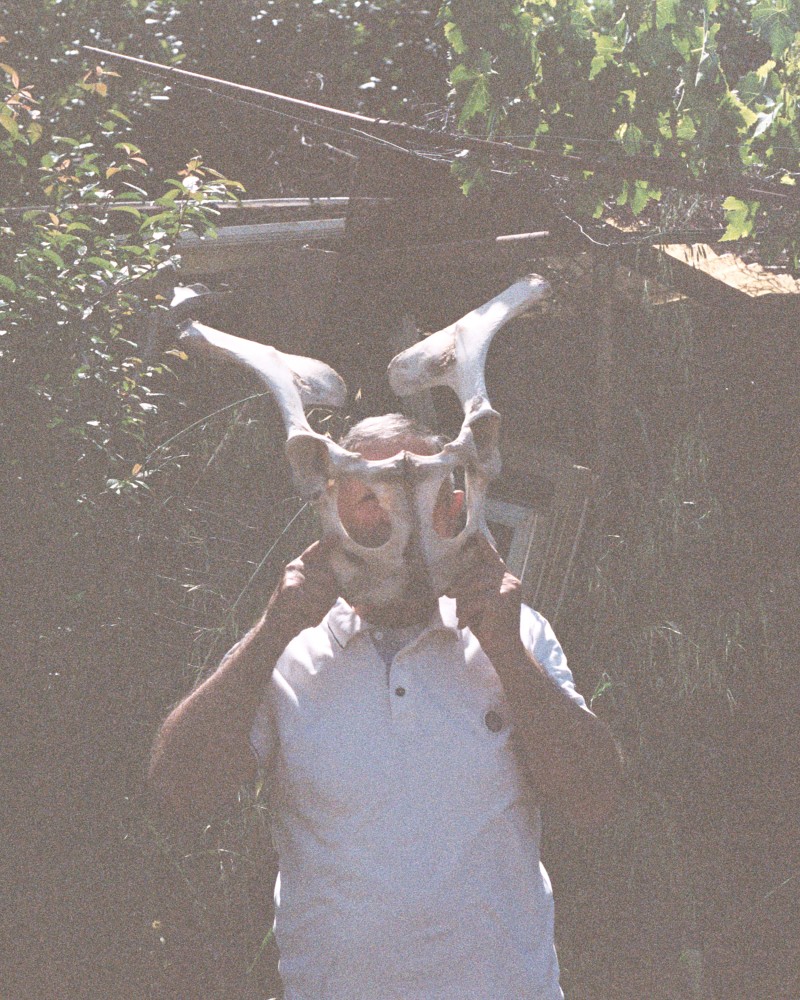
In the Western vision, the ethnographic object has long been perceived as something to be observed rather than listened to.
It has been removed from its original context and transformed into a sign, an aesthetic proof of elsewhere.
In museums and collections, its value has depended on how it appeared to our eyes, not on what it did in its own world.
Gesture, voice, use, relations – everything that generated those objects – has been erased, replaced by an aesthetics of distance.
The fetish and the artwork have met on the same plane, inside the museum display, both separated from life.
Only later, with authors such as Alfred Gell and Arjun Appadurai, did attention shift from form to action, from image to relation.
The object began to be understood as an agent — a condensation of gestures, intentions, and affects.
A fragment of the world in motion, not a mute document.
In my work with Gesuino Coinu, this reflection returns directly.
His objects are born outside any system of art, yet they carry the same relational power that contemporary anthropology attributes to ritual artifacts.
They resist classification, maintaining a form of autonomy and a refusal of interpretation.
Perhaps this is what the museum should do today: allow objects to remain opaque, to continue acting instead of being explained, and to reintroduce elements of context – the relationships each object generates.
I do not seek to censor the modern, aestheticizing gaze, I recognize its capacity to reveal formal strength, visual tension, symbolic attraction.
But I feel the need to integrate it with other dimensions: the material conditions, the stories, the relations, the gestures that keep these objects alive.
Only this way can vision remain both critical and sensitive.
--
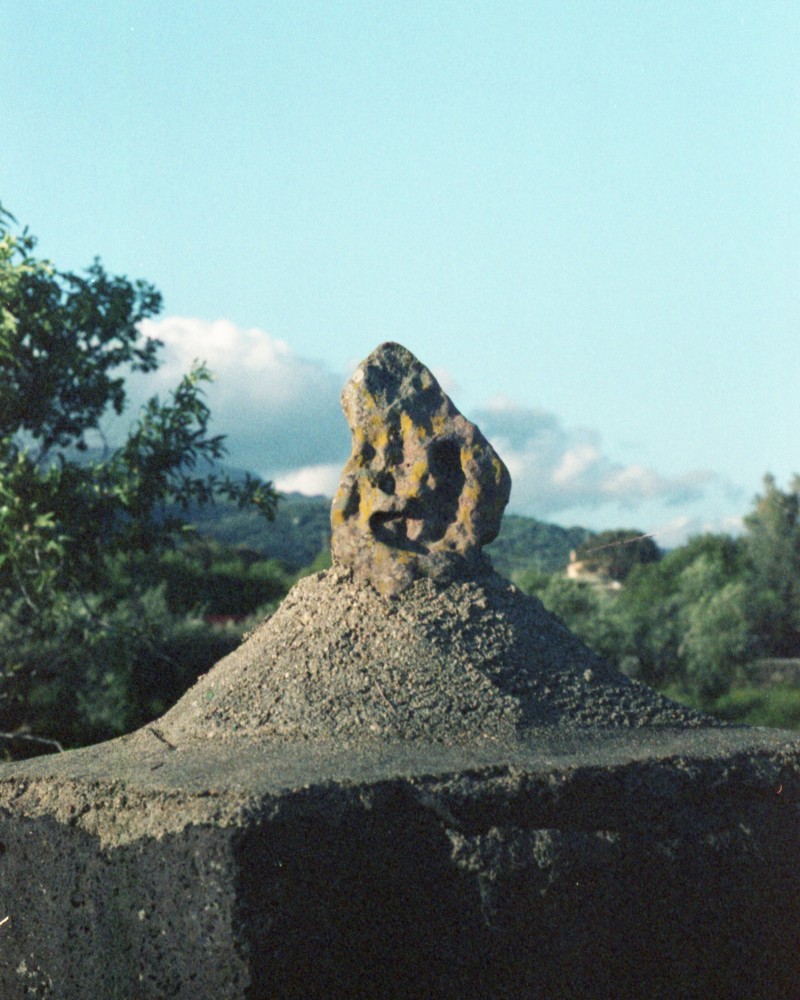
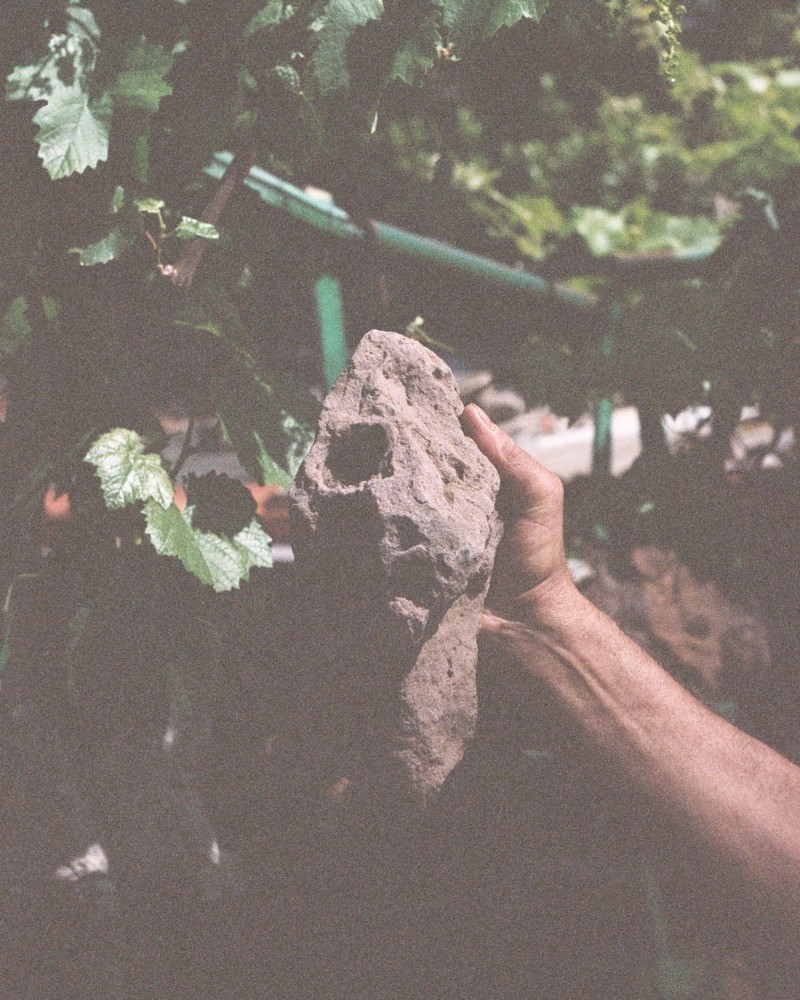
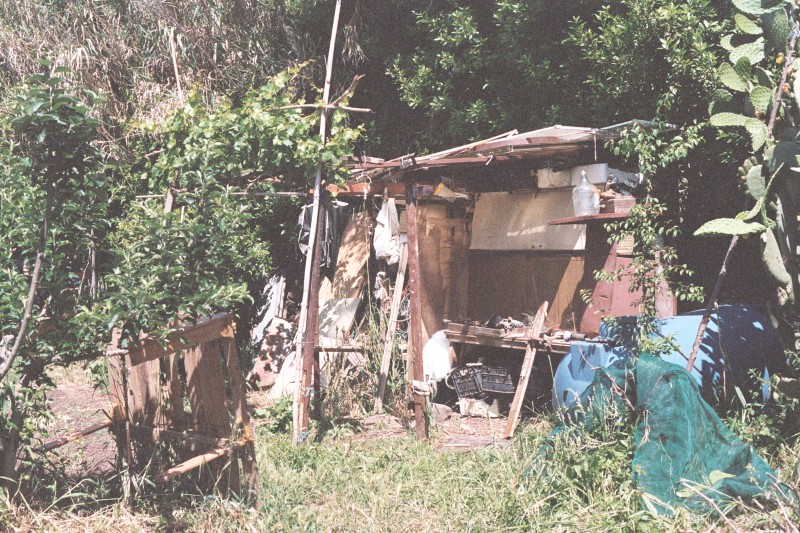
The relationship with Gesuino Coinu is grounded in mutual respect and transparency.
From the outset, asymmetries become visible and are often spoken about, by both of us, as the interviews show.
Gesuino perceives me as an educated man, someone from “il Continente,” a place connected to the wider world, richer in opportunities.
He associates it with access to visibility, recognition, and the circulation of artistic work within systems of value and exchange.
I become aware that our collaboration moves along a fine line between the expectation of “making a breakthrough” and the genuine desire for encounter.
Despite this tension, an immediate sympathy grows between us.
Over time it develops into a relationship of trust and affection, reinforced by the many phone calls and visits I make to his home in Macomer.
Gesuino and his wife Dorina welcome me with warmth and generosity – a form of hospitality deeply rooted in Sardinian culture – and extend it to the friends who travel with me.
Our connection deepens with each encounter.
Gesuino sees in me someone who has seen his work, someone who believes in it. He places great trust in my judgement and often seeks my opinion.
I approach the relationship with the ethical awareness that anthropology requires: clarity of intent, openness, and a constant effort not to influence his process.
I speak only when invited to do so, allowing his perspective and rhythm to guide our exchanges.
The days in Macomer are dense and full of movement.
I photograph continuously, studying the environment and the gestures of his practice.
As an artist, I respond to his work through composition — arranging situated still lives, combining fragments of objects and materials found on site.
Gesuino gives me complete freedom, working nearby in the fields while I observe and record.
There are also shared moments of conviviality.
Meals that last for hours, laughter, songs, long evenings of karaoke, a passion they cultivate with pride.
These moments dissolve the distance of roles and remind me that fieldwork, at its most sincere, is a practice of coexistence.
--
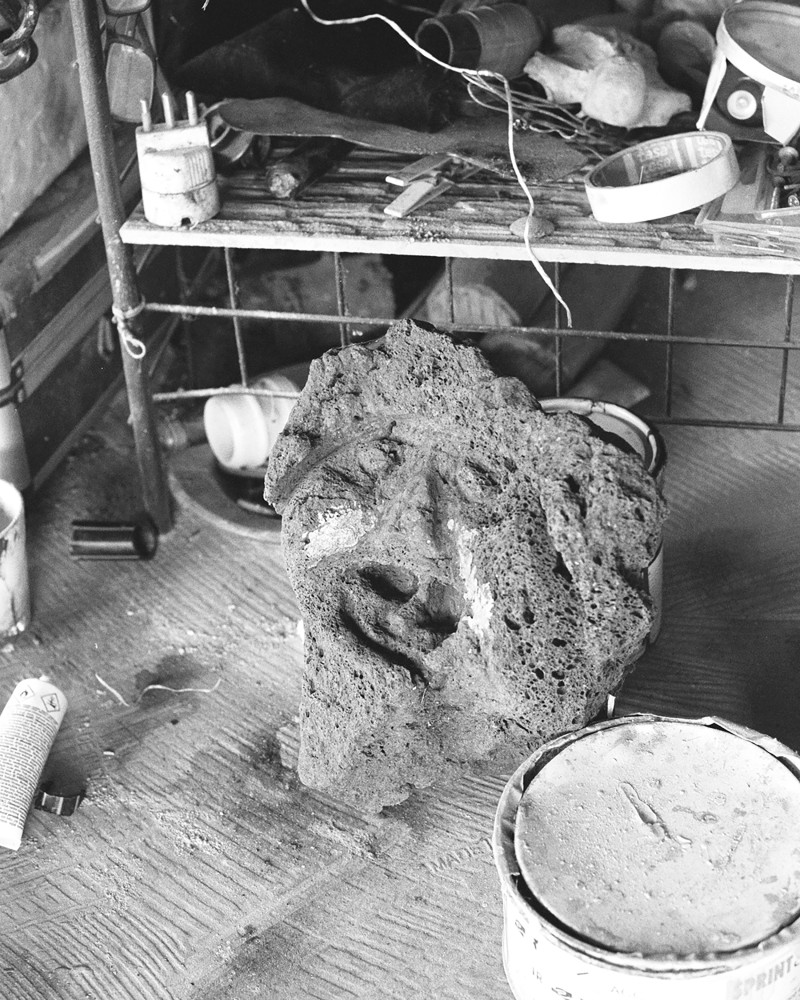
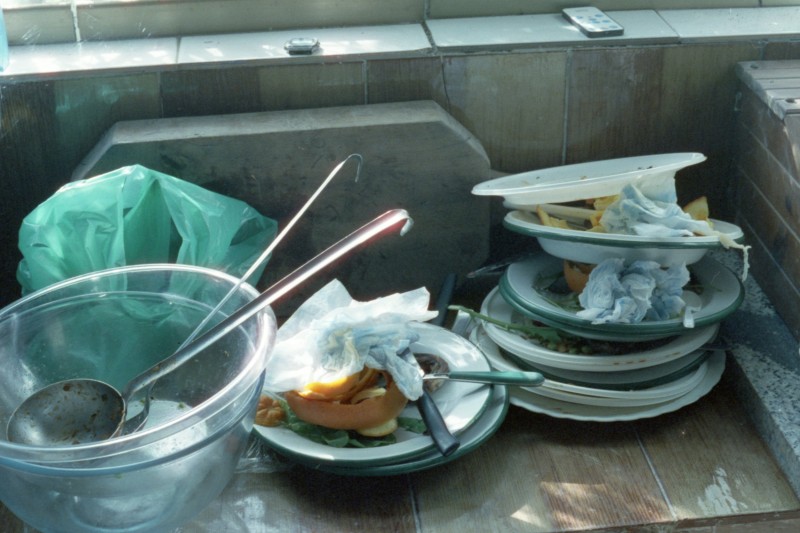
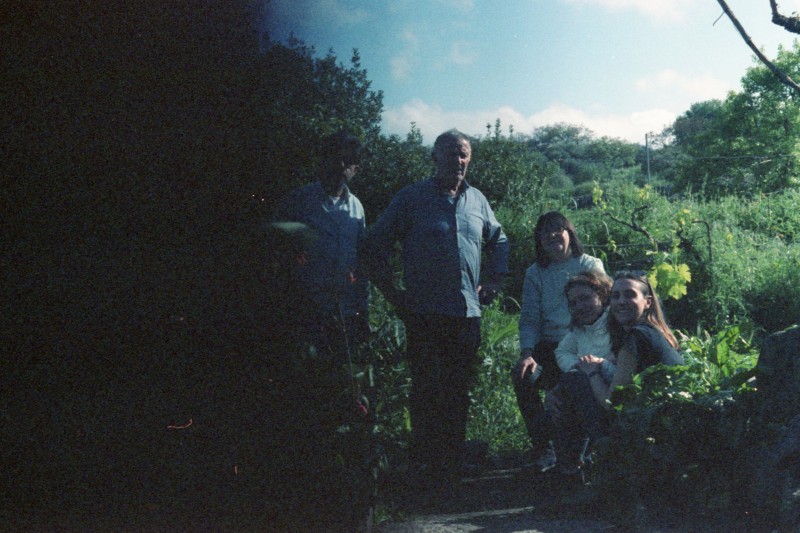
Gesuino Coinu worked as a car body repairer until retirement.
His small workshop, located a few metres from his home, was a stable presence within the urban fabric of Macomer.
After closing the business, he purchased a piece of land on the outskirts of the town, where he grows vegetables and spends most of his days.
A traumatic family event marks a decisive rupture in his biography.
Gesuino describes this period as one of inner transformation, a process of renewal that reshaped both perception and relation to matter.
From this experience began a new phase of life, centred on the need to create.
He started by producing masks linked to Sardinian carnival traditions, using wood and found materials.
Later he moved toward anthropomorphic sculptures made from animal bones collected during his walks.
He combines and modifies them using paints, resins, and tools from his former profession as a car repairer.
He also carves heads and faces into local stones, following their existing lines and fractures.
His gestures are immediate and adaptive, grounded in an intuitive sensitivity that merges manual skill and imagination.
Coinu says that his happiness lies “tra l’arte e l’orto” – between art and the garden –
in a daily rhythm that alternates agricultural work and sculptural practice.
The two domains sustain one another, forming a continuity between cultivation and creation.
He has made several attempts to share his work publicly, though with limited response.
The lack of recognition has fostered a sense of mistrust toward the local environment, while also reinforcing his connection with the researcher, perceived as a figure of listening and symbolic recognition.
--
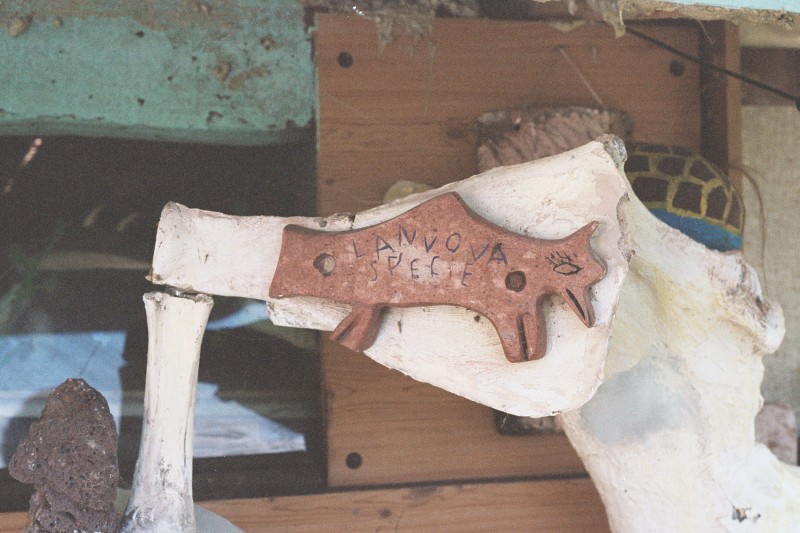
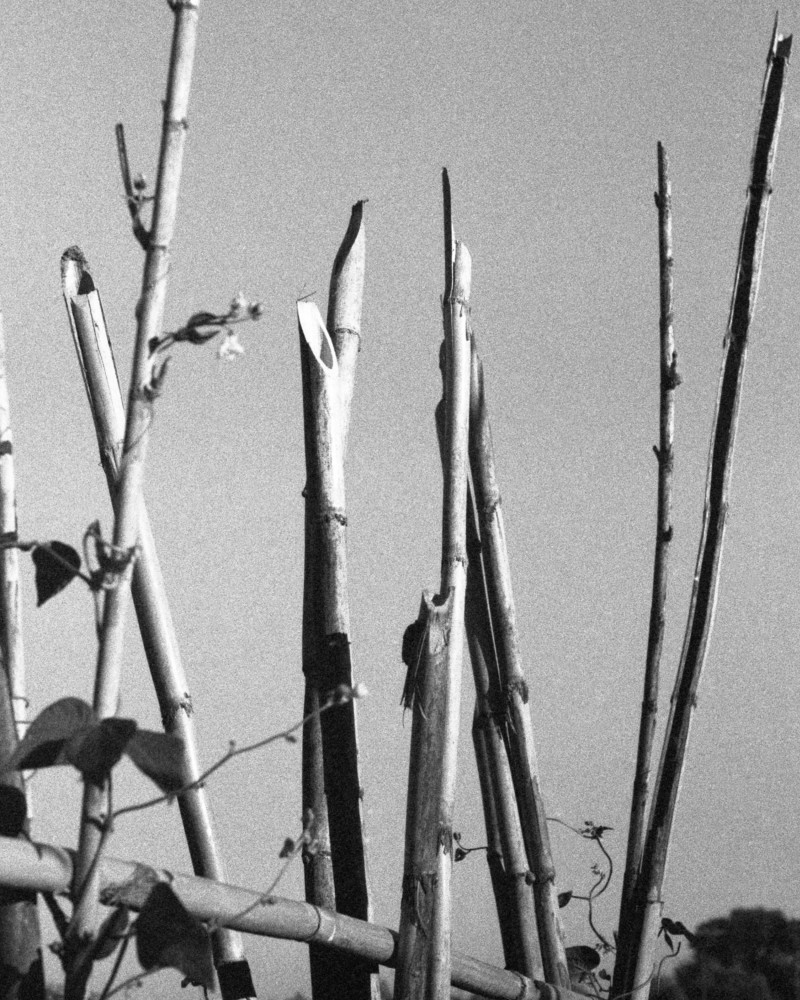
I believe that Gesuino Coinu’s work merits attention within the field of contemporary art because it articulates forms of knowledge that rarely find space in institutional settings.
His practice is not driven by conceptual frameworks or artistic discourse, but by a way of making rooted in the body, in daily rhythms, and in a mode of attention that emerges from direct contact with matter.
Gesuino often describes his work as a “gift,” something that passes through him rather than something he produces.
This idea, which will emerge more clearly in the next sections of the article, shapes his approach to both materials and relationships.
It is not a romantic notion, but a practical ethic: making as circulation, as transmission, as a responsibility that links the maker to the world around him.
He also speaks of perceiving “God in nature” – in stones, in trees, in the movements of the wind. Whether understood spiritually, sensorially, or phenomenologically, this relation to the more-than-human world structures his gestures and choices.
It creates a continuity between cultivation and sculpture, between working the soil and working matter, allowing him to move between activities without rupture.
This continuity stabilises his practice and gives it a distinctive rhythm.
The marginality of his position is not simply social or geographical.
It is also methodological: he remains outside the evaluative systems, aesthetic expectations, and temporalities of the art world.
This independence produces a certain clarity – a way of making that is not oriented toward visibility, recognition, or institutional validation, but toward maintaining a personal equilibrium between work, land, and life.
In this context, exhibiting his work does not aim at legitimisation.
Rather, it opens a space where these ways of knowing can be observed, discussed, and made perceptible.
Seen from within contemporary art, Gesuino’s practice functions as an index in the sense elaborated by Alfred Gell and later by Roger Sansi: a material trace that brings a network of relations to the foreground – ethical, environmental, affective, and spiritual.
His work does not present a marginal exception.
It indicates a set of possibilities: ways of engaging with matter and the world that persist outside dominant artistic and cultural frameworks, yet remain fully active in the present.
--
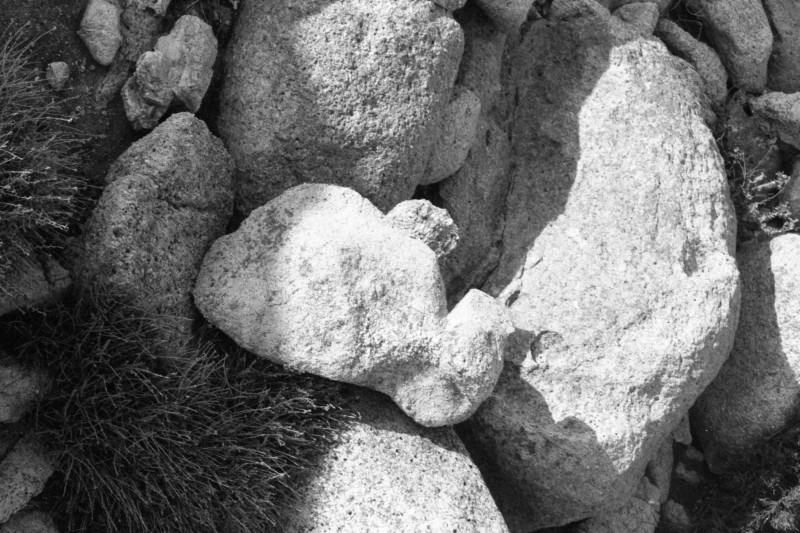
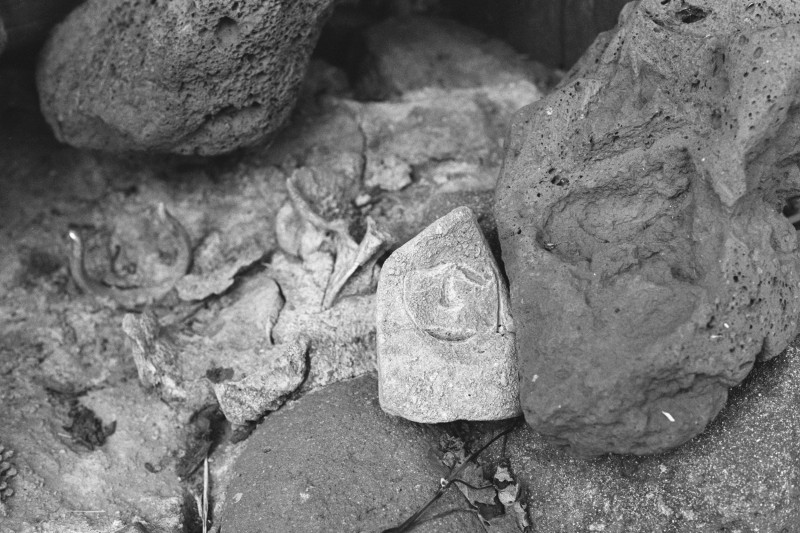

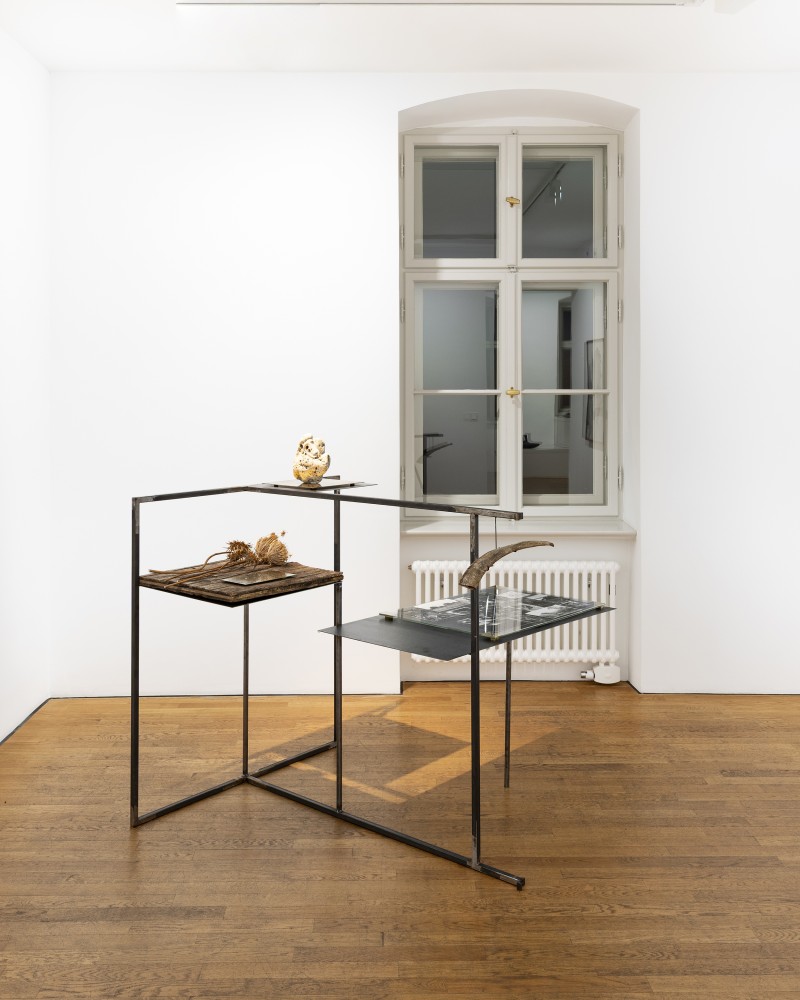
The structures of Conversazioni Barbaricine organize a field of relations between objects, gestures, and environment.
They bring together Gesuino Coinu’s sculptures and fragments from his working context: stones, bones, pieces of metal, traces of vegetation.
Each material carries a direct link to the landscape and to the sequence of gestures that shaped it.
The display operates as an observational device.
It arranges the elements through a tactile balance of weight, distance, and light.
Glass and iron establish a visual and material tension, a minimal topography that guides perception and allows the works to act within space.
Within this system, words also appear.
Fragments of conversation, excerpts from interviews, pauses, inflections of voice.
The spoken word introduces the relational dimension of making, bringing forward the inner rhythm and attentive presence of the maker.
The landscape is part of the perceptual structure.
It emerges through surfaces, reflections, photographs, and through the silent density of the materials themselves.
Each device becomes a site of listening where objects, voices, and images reveal a continuous correspondence between human gesture and environment.
The installation functions as a form of visual ethnography, making visible the network of relations that sustain the act of making and restoring matter to a condition of presence, movement, and shared memory.
--
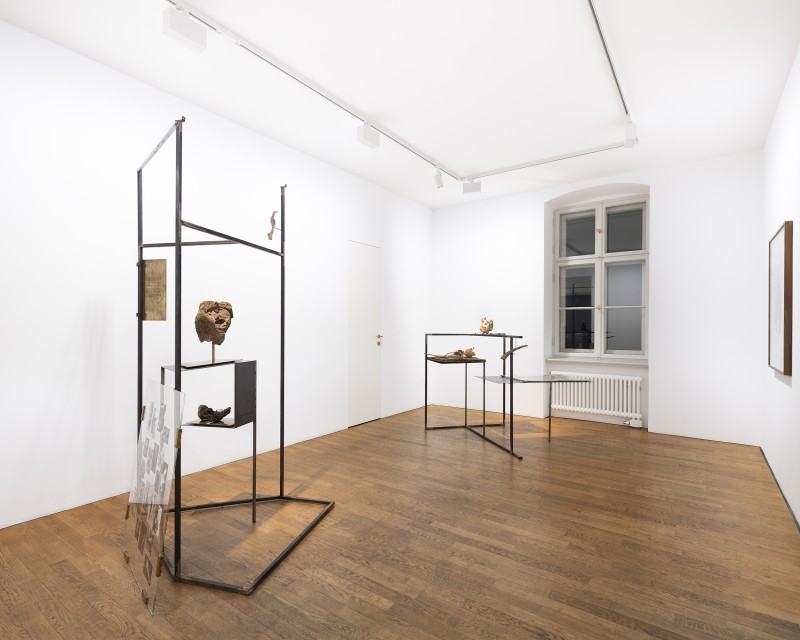
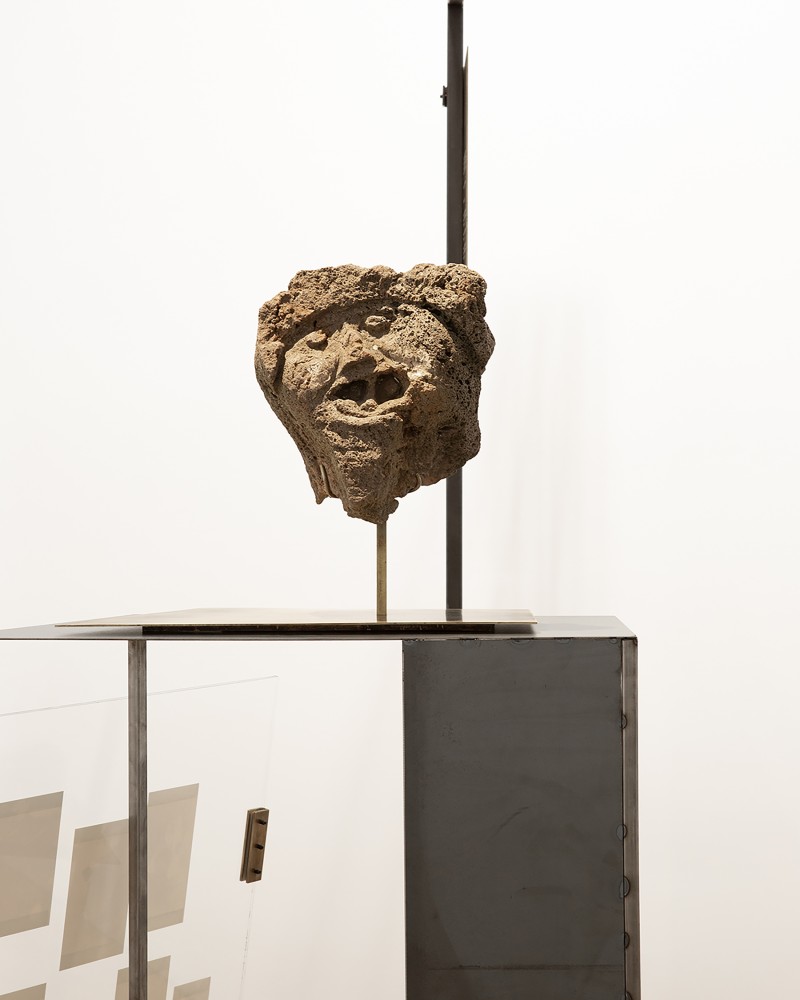
Showing Gesuino Coinu’s work in Berlin, at Robert Morat Galerie (28 October – 20 December 2025), is part of this trajectory.
The migration of his objects from Macomer to the white cube is not a neutral displacement, but a new chapter in their social life – another passage in which they are reframed, re-read, and recharged through different encounters.
As Arjun Appadurai argues, objects gain new meanings and agencies when they circulate between contexts.
In Berlin, Gesuino’s stones and bones are no longer only traces of a garden on the outskirts of Macomer; they become points of contact between distant geographies, publics, and imaginaries.
Their presence invites new forms of attention, new alliances, new responsibilities.
Berlin, with its heterogeneous communities and its ongoing debates around identity, migration, memory, and the politics of display, offers a particularly fertile ground for this kind of encounter.
In such a city – marked by constant movement, cultural layering, and social frictions – the arrival of Gesuino’s objects can generate new relations: unexpected resonances with other histories, other diasporas, other practices of making and inhabiting matter.
They enter a public sphere where their agency can be read, questioned, and activated in ways that would be impossible elsewhere.
Following Alfred Gell – and as Roger Sansi elaborates through the concept of the index – these works can be understood as material traces that bring other presences into the foreground: the maker, the landscape, the gestures, the hesitations, the affects that shaped them.
An index, in Peirce’s semiotics, never exists alone: it always involves its context.
Meaning is co-produced by everything that surrounds the object: the space, the viewer, the relational field, the histories that touch it.
This is why the ethnographic-artistic devices developed for Conversazioni Barbaricine do not present the object in isolation.
They carry with them fragments of the context that generated it: stones, bones, iron scraps, vegetation, fabric, tools, residues of gestures.
These materials do not “illustrate” Gesuino’s work – they participate in it.
They are part of the same ecology of making, and within the display they assume the same relevance as the primary object.
Alongside them, Gesuino’s own voice – fragments of conversations, memories, confessions – enters the space with equal authority, revealing the intimate narrative through which these forms emerge.
Exhibiting Gesuino’s sculptures in a contemporary art gallery is therefore not an attempt to legitimise them from outside, but to extend their field of relations.
From Macomer to Berlin, the objects continue to act: they connect those who encounter them to a specific way of inhabiting matter, and they ask the institution that hosts them to take a position.
Conversazioni Barbaricine thus becomes a hinge between places – a device through which the cadences of a Sardinian garden can reverberate, for a time, within the spaces of contemporary art.
Not as a representation, but as a presence.