Presentation of the Between Restitution and Re-appropriation dossier
The publication of a dossier in Agora, a novelty that goes beyond the regular publication space in the journal, constitutes a new challenge for Etnográfica in terms of content communication. Given the multimodality that this dossier proposal offered from the outset, we decided to consider publishing it on this platform, favouring digital editorial technical possibilities that allow not only this flexibility in content presentation (and which allows us to preview this piece of the set, which is circumstantially pertinent and timely) but also multisensory access to the full proposal.
Debate Open Restitution Africa
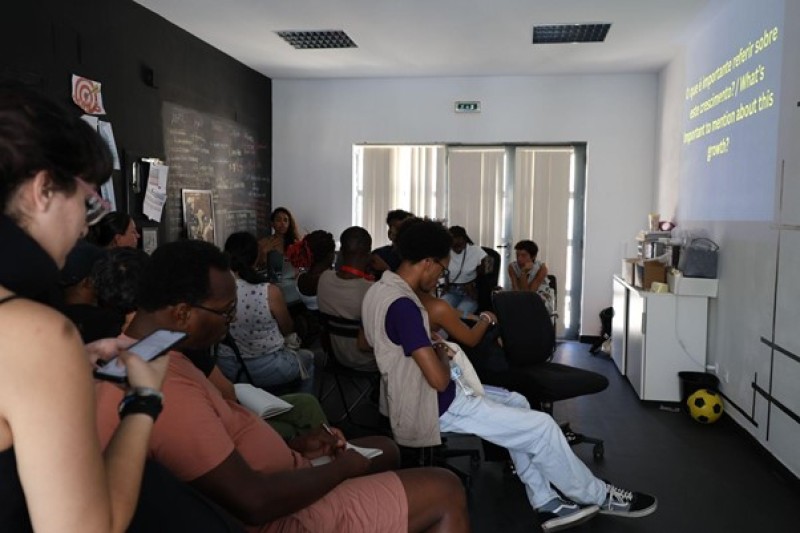

@Rodrigo LacerdaQ – Do you remember when you posed the question about the court case to stop the restitution of Benin Bronzes, and the court case. In that case, you referred to the American, or Afro-American descendants, as the historical diaspora, and to the Lusophone diaspora as the recent diaspora. Why do they have different names? Does one have more history than the other?
MM – Actually, the term historic diaspora generally refers to the fourth diaspora [victim, imperial/colonial, trade, or labor diasporas]. Like the enslaved diaspora. So, it would mostly refer to the New World. This would be Lusophone in the centre of Brazil, for example. The Caribbean and North Africa. And that's a historic diaspora. That’s a much longer time in the past. And the more recent diaspora is usually people who come maybe in the last two or three generations to Europe or the Americas. And maybe they have a closer relationship to the African continent. And often, the more recent diaspora, like a few generations, is very involved with restitution in Europe, for example. The people are pushing very hard and the activists are often people who go back maybe not even two generations. They arrived from Africa very recently. And with this diaspora, there's a bit more of a connection. However, with the historic diaspora there’s less of a connection. This is partly because of some of these historical issues, but also due to the cultural continuity that has been cut really, really short.
Q – You mentioned many times that when people talk about restitution, they normally speak to their colonizer. So people who speak Portuguese will speak to Portugal. People who speak French will speak to French or Belgium, etc. Have you seen, or have you done any work regarding this at Open Restitution Africa? Do you have any examples of how you could solve this linguistic barrier?
MM – W've started doing a lot more work in French. For example, on our social media, we try and do a whole lot of work in French. I think one of the things is resources that can make translation more possible. To be honest, we’re also having a challenge with indigenous languages. For example, we're now doing a lot of research on tracking restitution processes. And if you have to go to the village and speak to the chief, they may not even speak the colonial language. And then we're trying to build that into a digital archive. And even trying to find the translators, that’s even more work. I believe it's quite a big challenge, but it's not impossible.
Q – You were talking about how, you know, there's this whole thing where we don't ask enough Africans. Or we don't get to hear enough African voices about what happens to the artefact after it's been returned. And I totally get that. So we end up stuck in the question of whether to return, right? Which is a yes or no kind of question. It's binary, and that's incredibly problematic. But then also, from a tactical perspective, what I see a lot in the debate, which I find really unnerving and infuriating, is colonial museums trying to dictate the terms of what happens to an object after it's been returned. My question is whether tactically it makes sense to open that gateway to say we need African voices to tell us what happens. As important as this debate is, it might mean accepting colonial museums saying “we like these Africans and what they want to do with the objects” because that is exactly what they want to happen. And it doesn't kind of diminish the point that it's none of the colonial museums' business. They should just give it back and let the Africans decide. Sorry, it's really long and convoluted. And I've lost track of the question a little bit, but what's your reaction?
MM – Yeah, it's not an easy answer. The only way I can think of answering that question is that Africans don't agree. And that's fine. And I think the big issue with the kind of binary of return or don't return debate is that it assumes (and we were talking about this earlier), that there's an end, and that you can just give something back and then you're free. I think, for example, one of the things that happens when Africans are disagreeing with each other – for example, in the state to local or state to traditional authority, etc. – is that there'll be this narrative “sort yourselves out first, and then we'll return it”. But I think that the vital issue here is that so much was taken from us and we are broken. You can't expect to give it back to a fixed society. And that the whole process is repair. And that work is a difficult work. And the most difficult part of that work is the work that Africans must do. Giving back something is the easy part. There's a lot of talk on how returning is difficult. But that's the easy part. The fact is that it’s going to take 100, 200 years longer, you know. It's not going to be a quick process. And so, in a sense, I think it's got to be messy. Like how it is with our family fights. It's the human conversation. It has to be messy. And it's going to take time. And it's going to be complicated. And we have to have the strength to work, to stay with that.
Q – He wants to make two comments and maybe one instigation.
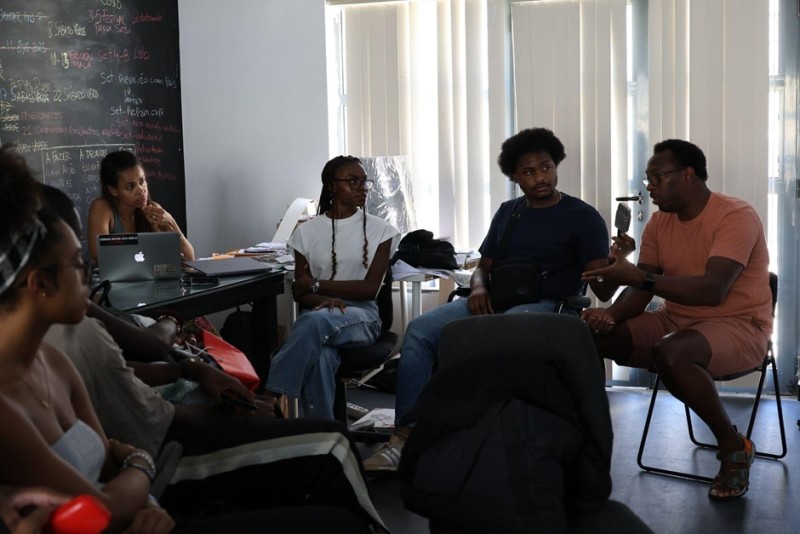
@Rodrigo Lacerda
The first comment is related to Macron and the speech he gave. The thought is, Macron wasn't innocent when he made that speech. He knew what he wanted to do once he made it. He is not seen as an ally, but as someone who used restitution as a political weapon. What is your thought on that? What Macron decided to do was to divide and conquer. If you look right now at the geopolitical situation in Africa, you will see that people are divided about restitution. Who gets to get the artifact back? Who will get more tourism or historical politics about that? And with all this confusion and debate, France can keep its grasp on some African countries for a little while. What do you think about this?
The next comment is about the underlying issues or undertones. The things that aren't heard when you talk about restitution. Things that you see and understand, but are not easily evident. So, what happens when the subject of restitution is, as you said earlier, not ready for a broken society? You know, big facades like Senegal's new museum. And all these aren't really what the biggest focus for Africa's restitution is, and it feels like at some point this is kind of a workaround. It is a beginning but not the ideal way to build restitution. The infrastructure and the resources we have in Africa are not enough to comport the return that we're getting. Because they are not just artefacts. They are not just remains. They are bodies. They are culture. They are even religion. They amount to family even, or blood. The infrastructures we have are not enough to call this process of returning an artefact, restitution.
And the final question is how are we really going to proceed with restitution in countries that were double colonised in terms of religion, first by Christianity and then by Islam? Do you believe it's possible to bring forth what the original culture or religion was? Or if not, now, this is my take on it, if you're not going to build or rebuild the original, maybe there's a way to create a third option. Which is acknowledging our origins and maybe still being able to live with what is there right now.
MM – Yes. The question on restitution as a political weapon, absolutely. I think Macron may be the first one who got clever. But absolutely. Across particularly Europe, I think restitution has been used as a political weapon on the African continent. Sometimes, in very clever ways. Namibia is very clever. And, for example, I've even heard people in the cultural fields in different European countries say “but you know, Macron, he made the speech, and then he didn't return. At least look at us. We are returning”. So it's like a competition. And this competition for who's the most civilised actually in a way mirrors the competition between them for collecting. When they were taking these things from the continent, they were competing with each other. There's letters from museum directors saying, “Oh, but France has got so many, we can't let them get these ones. We have to get these ones in our country”. And what you see in that, using restitution as a political weapon, is a concern more with inter-European notions of supremacy than with an ethical and justice-oriented relation with the African continent. And I think what's happening with us, especially in West Africa or France is where we see the most evidence of this.
I will try and answer the second question about subjectivity in museums not being enough for restitution and the Felwine-Sarr provocation at the same time. I work with African museums a lot. That's actually how I came to restitution. And working with African museums is heartbreaking. It's very painful work. I think there are some very good people at African museums. But it's really the place where you see how problematic and broken and violent the museum as an institution is. I was saying in an earlier discussion that part of this thing of Europeans defining the restitution conversation is using museums. And museums are just not made for repair. They're made for storing objects, showing them and doing research. That's what they're for. And that's fine, but they're not for the difficult work of trying to rebuild ourselves as humans. That's not what museums do.
But I think the reason I stay in restitution work, even though it makes me very sad sometimes, is that I think it is such a brave thing to do. To say I am going to find a way to rebuild myself. And I'm going to rebuild myself in a way that gives you the opportunity to address the things that you have done. I think it's extraordinary.
When Europeans say, “Oh, it's too difficult”. It's because it's difficult. Yes, of course. But it is a work that Africans are saying they will do, and that they're going to try to do. And so, for me, to be involved in restitution is to try my best to contribute to that very difficult work because that work is necessary. How much we will succeed doesn't really matter. The point is, I think that we must try. And with issues such as religion and spirituality, I can tell you some stories of crazy things from African professionals who can't look at objects that have been collected by Westerners because of spiritual reasons. Some of them will run out of the room because they're so afraid of some of the things that have been collected. Now this is just fundamentally human. It's the core of who we are. And it's such difficult work and now we're doing it. So, we have to do as much as we can to the best that we can.
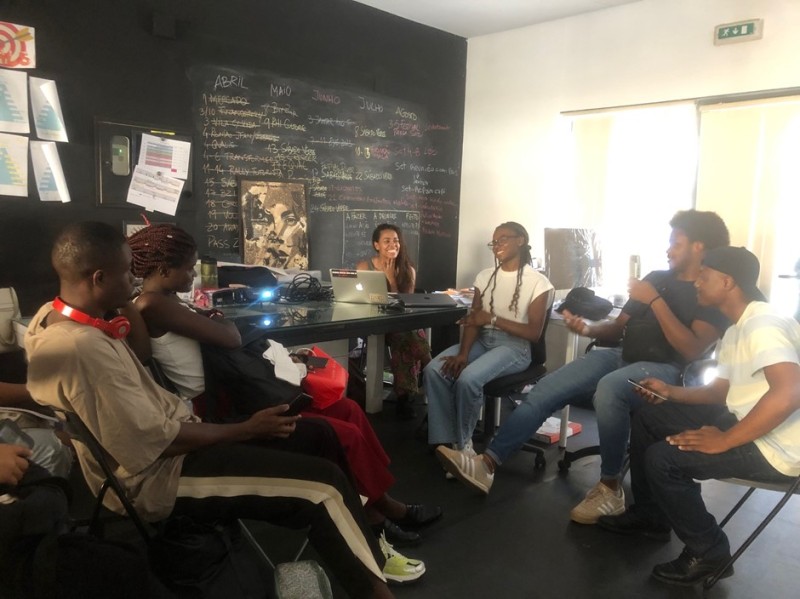
@Laura Burocco
Q – My question stems from a module that I had at uni, where we went on a few trips to museums. And one of the questions that was persistent for me throughout the duration of the module was of the multicultural culturality or the hybridity of these ethnographic artefacts. For example, a lot of them were produced during the colonial era. And so they have a mix of a pool of Lusophone, Asian and African cultures and concepts and aspects in them. I wanted to know how do you go about picking and identifying and categorising these artefacts? And then, obviously, picking and deciding which countries they belong to and should be returned to?
MM – I was thinking about this a little bit coming here and preparing for today. Because I've seen quite a lot of objects. I think even some of the Benin Bronzes have Portuguese figures in them. And a lot of European collections of other European countries collected objects specifically made for Westerners on the sale market, usually for Portuguese, because of the very early kind of contact. I think it's not so much a question of categorization. I think it's a question of demand, and who wants what? And that's not necessarily an easy question. And I think increasingly you will see this situation where many people are demanding the same thing like in this North American/African American/Nigerian case. But I think it's not necessarily about claiming authenticity, or origin. I think that's a dangerous narrative. And it's more important to speak about this mixing, and the time shifts, because so much of the way African culture is presented in the world is as though it finished, it stopped. It's trapped in time. And trying to categorise this as belonging to those people, I think replicates that problematic in a way. I think it's more a matter of what is important to whom.
Q – The first question was just about Open Restitution Africa itself and how it came to be. Since you're an artist, he wants to know how it came about. What do South Africans think about openness, restitution, and the work that you do outside of academic contexts with students? And how do they work with Open Restitution Africa if they do?
The second question was based on archives. He wanted to know whether at Open Restitution Africa you work with them. Because when you think about restitution, it's always academic and museum contexts. And he wanted to know whether you also work on the basis of knowledge, such as archives, books, and anything. Because a lot of the times when students, ore people in general, have an interest in this topic, they end up having to travel to a European country to learn about the topics. Which means they're spending a lot of money outside of Africa instead of keeping it at home.
Last, in terms of African diaspora, he would like to know if you have any ideas on how we can go about making these conversations happen in a Pan-African context? Where it's more open to a wider range of people so that we can find more solutions into making this restitution happen in the best way possible?
MM – And what was the Amilcar Cabral point to the archive?
Translator – That was based on the second question. He was mentioning that there is an Amilcar Cabral archive here in Lisbon. And so asking about that in the African context question regarding local archives.
MM – This is a very, very good one, actually.
Q – What do you know about restitution in a Lusophone context? And what do you think about the fact that we have our ancestors, you had mentioned ancestors like bodies, corpses, in these different museums? Because if no ceremony has been thought of, restitution is out of the question.
MM – What I heard is that the talk about restitution in Portugal is non-existent because what happened is, after the trade and all, the gold, and everything that was taken, it's already been used. The infrastructures have been built. There are no physical things, no thrones or anything that we can get back.
Q – What we have are written archives of slave trade. We actually have museums that describe the anatomy, the noses, the faces and the hands of where people came from. And how they should look. And we have houses that were built on that money, but it's not something that we can physically grasp or restitute back from these countries.
Translator’s comment – The other subject that we were talking about is native languages and linguistics. To be in Rome, you must be Roman, right? So when we travel from original countries to stay here, what happens is that our parents want us to learn these new ways. They don't want to be seen in a different way. Or they don't want their children to suffer even more prejudice because of that. The experience for me with learning native languages, I had to be smart. It's like I was mute, or I had to resort to sign language to understand what my parents were saying in their native language. This is not true for every country. For example, Cape Verdeans, they really speak a lot in their native language, but it's also directly derivative from the Portuguese language. So it's not the same. The way that I learned my native language – and I only knew one word, and it means "hunger" in Kimbun from Angola, the word is njala, that's how you say it – was through hearing it, since my grandmother knew it because her parents were from Angola and she was brought to St. Thomas and Prince. It was a really weird context; we were watching a movie called The Colour Purple, and it appeared on the screen as a chapter and she knew what it was. And then I found out that when my parents don’t want me to know what they're talking about, they'll talk in the native language. They don't know that I know it sometimes.
MM – I will try to bring the questions together. Open Restitution Africa was started in 2020.It's very new. And for the first two years, we had no money and everything was online. That's actually the easiest way to get Africans to talk to each other. I remember we had one webinar where a German woman who works for the restitution programme in Germany made a comment that it's the first time she sees Africans talking to each other with no European on the panel. And that was in 2020. It's crazy. But for example, it costs the same amount to fly to Europe as it does for me to fly to Angola, or to Nigeria. It's really expensive. And of course, online, you lose so many people. It's like it only caters for the wealthier people who can afford to be on a webinar and consume that much data. So, it's not the perfect solution for this intra-Africa connection. But it's a start. And we do quite a lot of work trying to make restitution more accessible, particularly to younger audiences and African audiences.
The material we produce is mostly also online, which means that it is easier to distribute and translate. For example, we've done a podcast on digital restitution (2), and it's been translated. The podcast is in English, but we've done a transcript and a little zine in German and French. We should do one in Portuguese. And then, for instance, we've just developed an explainer video series, which is just trying to give you the full picture of restitution.
It’s especially aimed at younger people. And we got it done by a Kenyan all-women team. We're getting it dubbed in French by a Senegalese all-women team. And we should do that in Portuguese too, I think. I've never actually spoken like this in South Africa. Yeah. And it's because we've been working online and we were working during the pandemic. My first talk on this topic in South Africa is next week. Actually, I did it here first. One last sentence, just to say that with the explainer video series, we're doing screenings. The reason I'll be speaking next week is because we're doing screenings in many different places in the continent. And I'd really like to speak with some people in Berlin, who are like a decolonial African diasporic organization. I think we should screen it as much as we possibly can. Maybe we can do it here as well.
And the last thing to say is that the archives are super important. My colleague in Nairobi, Chao Maina, does a lot of work with archives. One of the projects we're trying to start working on is also on sound archives. With traditional songs, some of these recordings are really early, from the 1930s. This kind of thing. The archives are a very precious place to also claim things and we often don't know what's in them. There's lots of work to do there.
And then just to add that I know nothing about restitution in the Portuguese context, which is why I'm here. I learned that this event [the ORA presentation] was advertised online and somebody made a comment about it, saying it was nonsense. They also took a piece of my bio, quoted it and called it, now I'm not going to remember the Portuguese term [linguajar de gueto] but something translating like "academic ghetto". And I was very happy. That is the best thing that's ever been said about my work. So this is my lens of engagement with restitution in Portugal.
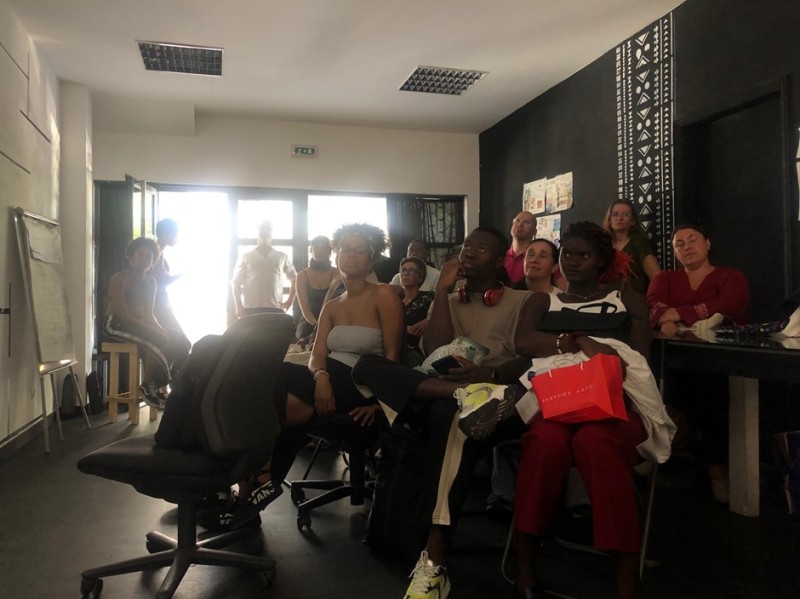
@Laura Burocco
Q – Firstly thank you for the opportunity of being part of this presentation, because I really do not have a lot of knowledge of restitution. By the way, I am the president of the African students group. The first question was what countries in Africa were more affected by all this theft, and what's the role of museums in the storage? But you already addressed this second question. What are success stories in terms of restitution physically, and how do international laws apply to restitution?
MM – Okay, so what countries were most affected? This question feels impossible to answer. I think there are cases where countries were very specifically affected. Let's say there are people who were very specifically affected because what was taken had very specific spiritual impact. And in these cases, for example, there’s the Ngadji drum of the Pokomo people of Kenya, which is in the British Museum. They've never shown it. It’s in a basement. Ngadji drum. The people are called Pokomo. And that drum brings the rain. And since the drum has been gone, the fields have collapsed. So you've got these kinds of much more spiritual impacts. Or Ngonnso, who is the Queen Mother of the Nso in Cameroon. The people who are demanding her back talk about her as a person, not as a thing. And she is the manifestation of the Queen Mother. Or a similar sort of case, is a human ancestor who was taken from Zimbabwe, she is the human manifestation, she’s actually a human being. But she comes in waves. She comes multiple times and she leads resistance wars. And I think, in the 1920s or 30s, she was killed in the second Chimurenga in Zimbabwe, and her body was taken to England or something. So there are some that have a real spiritual impact. And then you've also got contexts like Namibia, where there was a genocide. Germany has tens of thousands of Nama and Herrero people. And I mean, there's historical, factual proof that many of the people who were involved in that genocide went on to be Nazis and were involved in the Holocaust. They practiced there in Namibia. And so many of those remains are now in German museums. There are specific histories but not one that is worse than that other per se.
What were the roles of museums? One thing I want to say is that it's important to know that in many cases, museums were involved in the violence. For example, in Ethiopia, in the Battle of Magdala… I shouldn't call it a battle… In the looting of the Magdala, which was a royal kingdom, there was actually a staff member from the British Museum who went with the soldiers. And his job was to point out which ones were the best things that he wanted to take back to the museum. So the museums and the military were connected. It's not like the museums are just academic institutions. That's what I'll say about the role of museums.
I'm going to give a short answer to the question about international law. There are a number of people trying to work on this. And they are what are called legal precedents. These are legal processes that have come before. One of the most important ones is around Nazi looted art and the Holocaust, which has global agreements on it that are enforced. But there are some other legal frameworks that also prove that in the period that many of these things were being taken, the countries that were taking them had laws that said that that was wrong. There is a man named Charles Taku, he is a Cameroonian lawyer, he works in the International Criminal Court, but he's also a prince of the royal family. He's a chief of the royal family of his ethnicity in Cameroon who were attacked, and his people had some of their ancestors taken and some of their possessions taken. And he is probably the number one person contact if you're interested in the legal issues.
On success stories, there are some very good ones but they’re not many. We're kind of in the early phases. I haven't spoken about South Africa. I'll talk about a good success story from South Africa, which was the return of a human ancestor. There are some cases, unfortunately, where human ancestors have been returned and they've just been stored in the basement of a museum in some places. But this success story, her name is Sarah Baartman. She's quite famous. And it helps when they're famous. That was a very good case of government and communities coming together. And in South Africa there are communities that are not very strong, which is a bit of a problem. It can be difficult if a community is weak or not of the ruling people or something. This is a community that's not very strong in South Africa, but they were very well consulted, working with African museum professionals, but also others. So not just museum people because you need more than museum people. And the process of her return was done in a spiritually respectful way. They used the traditional spiritual practices of how you lay someone to rest. And she was actually laid to rest. This is also because she's famous, there's been a lot of knowledge about her. She's even in the school curriculum. And you know, if artists are making work about her, she's in the schools' curriculum and then there's more knowledge being birthed. This is super important for restitution. It can't just be that she's laid to rest.
Q – Since we're discussing changing what the museum is for an African-based context, what is your perspective of Museology and Archaeology as a specialist in this area?
MM – There are many people trying to think about this question and doing really interesting work about how to reimagine museums. Particularly, I think from South America and Africa, and a little bit from India as well. And I think for the African continent restitution is like the calling for museums to just change. And whether we change their names or whatever, but to change from the inside. To make clear what our relationship to cultural heritage is. Restitution is that opportunity for so many things.